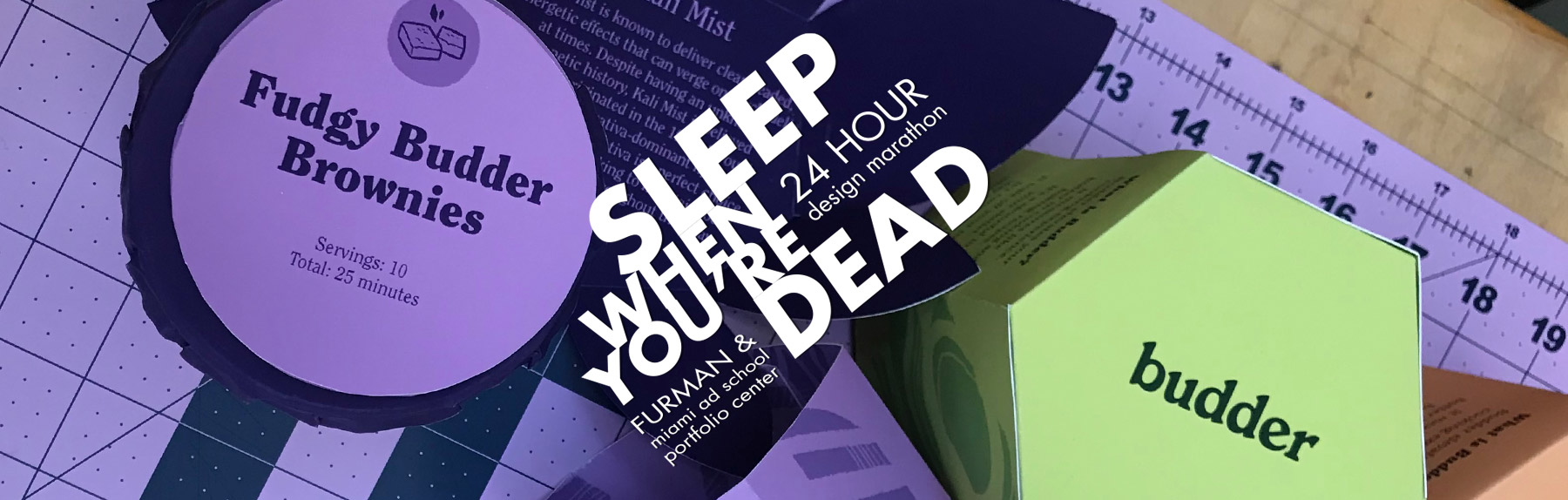
From its inaugural debut in 2018 at Furman University, the Sleep When You’re Dead 24 hour Design Marathons have been a yearly event I relish being involved with. I have been fortunate to be able to spectate on my favorite aspect of creative thinking, the raw formative process. Yes, I am that professor whom flaunts her vampire nature of staying up all night gracefully to enjoy watching and documenting the design teams formulating their ideas, processing strategic plans, prototyping, and constructing final visual outcomes, as well as defending their ideations. The beneficial nature for me as a professor is to observe my students succeeding, unassisted by me, and cultivating extremely clever design narratives that are impressive for their portfolios and award winning for innovative and entrepreneurial aspects. After three years, a bonus is to see students I have had from beginners to graduate studies, exceed my expectations as they shift from a minor role to struggling with leadership in a group dynamic. Each year the participation has grown, as teams are sorted and assigned different rooms in the Roe Art Building to occupy for the 24 hours and finally present to the panel of judges and public. Below are some of the amazing images and projects from this event. Though I have a plethora of design team images, generally I have promised many after the first few hours not to post the pictures of them in their disheveled state as the night progresses.
2020
This year the twist in the challenge was specialized packaging for existing brands for the following companies: Silk Milks, Meyers Soaps, Godiva Chocolates, and Twinnings Teas. Teams were allowed to choose which brand they wanted to work with and were required, as in the past, to produce a trio of packaging along with a marketing presentation explaining and extolling the added value of the new product line. 9 teams with 5 students each


2019
The design brief this year was all food related: bacon, butter, and pasta, which have their own unique set of challenges. Teams created new companies and a trio of products with an emphasis on gaps in the food market and new and innovative food items. Along with the packaging, a presentation was created introducing their new food items and defending the need in today’s market. To say things got sticky this year was an understatement. 7 teams with 4 students each


2018
The first year there was so much mystery and excitement for this imaginative new endeavor. Students were given three creative options: smores, tea, and batteries. Design teams had 24 hours to produce a new company and innovative product line containing a trio of packaging with a marketing presentation to launch the new venture. 5 teams of 3 or 4 students each


